Every trip, I love capturing the soul of a city through my lens. Dresden, known as the “Florence on the Elbe,” has deeply fascinated me. It not only boasts magnificent Baroque architecture and profound historical heritage but is also graced by the winding Elbe River, the lifeline that perfectly connects the city’s classical and modern aspects, tranquility and vitality. Along this riverbank, light and shadow constantly shift, each moment resembling a frozen painting waiting to be discovered and captured. On this journey to Dresden, I used my camera to visit all the best shooting spots, fully recording the story of the city dancing with the Elbe’s light and shadow.
1. Brühl’s Terrace at Dawn — “Europe’s Balcony” at First Light
The morning in Dresden carries a tranquil power, with the air slightly cool and moist, tinged with a subtle weight of history. My first stop was Brühl’s Terrace (Brühlsche Terrasse), known as “Europe’s Balcony,” an excellent vantage point overlooking the Elbe River and Dresden’s old town panorama. At this time, the sunlight slants over the water, making the river sparkle and reflecting the outlines of the Semperoper and the Zwinger Palace in the distance, like a watercolor painted with light.
Using a telephoto lens to capture the morning mist and reflections on the river creates images full of poetic atmosphere. The terrace’s railings and stone sculptures in the foreground add layers to the composition, with the historic buildings in the background providing both detail and grandeur. Especially recommended in autumn and winter when the morning fog often envelops the riverbank, creating a mysterious and dreamy ambiance.
2. Night Light Trails in Front of the Semperoper — The Artistic Temple Under Illumination
As night falls, I walked to the plaza in front of the Semperoper, a 19th-century building that appears especially solemn and full of stories under the glow of lights. Soft amber lights pour over every architectural detail — the dome, the colonnades, the sculptures — all coming alive under the illumination. Using a wide-angle lens here can capture the grandeur of the opera house in full view, while the surrounding crowd and street lamps add dynamic light spots, enlivening the frame.
To capture the flow and detail of the lights, I often use a tripod and slow shutter speed, extending exposure time so that the lights of passing vehicles create flowing light trails, bringing dynamic rhythm to the otherwise still building. Combined with the reflections along the Elbe River, the Semperoper at night became for me the most poetic symbol of Dresden.
3. The Golden Hour at Zwinger Palace — The Perfect Encounter of Light and Architecture
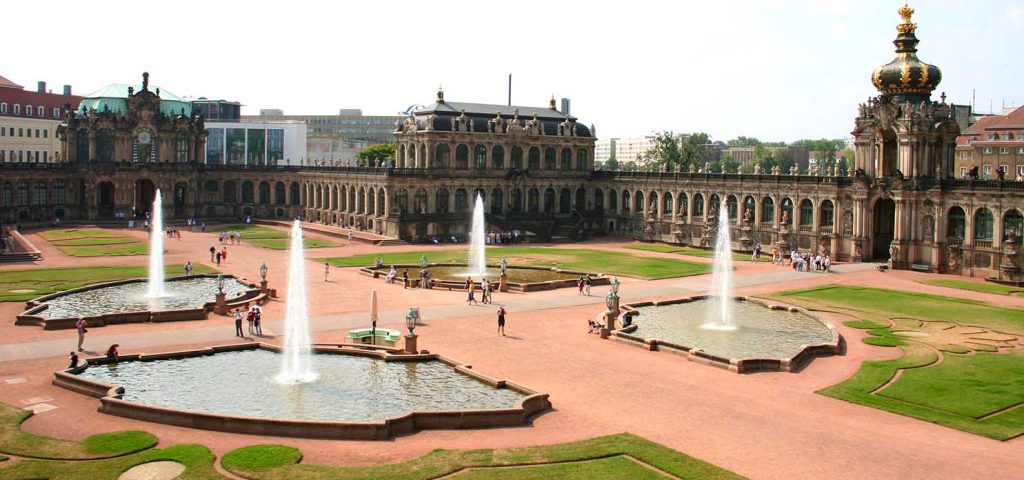
Zwinger Palace, a representative of Dresden’s Baroque architecture, is one of my highly recommended shooting spots. The intricate architectural details — sculptures, arches, fountains, and courtyards — intertwine to form a visual feast. Especially during the afternoon “golden hour,” when the setting sun casts warm light through the arcades, dappled shadows fall on the stone walls and the ground.
I enjoy using a medium telephoto lens to capture the changing light and shadow inside the arcades, pairing it with a low-angle perspective so that light becomes the star of the image. The fountain’s water droplets refract rainbow colors in the sunlight, adding vitality and dreaminess to the photo. Moreover, the palace courtyard is an excellent place for street-style humanistic photography — often with performers or visitors in traditional costumes, injecting vivid storytelling into the pictures.
4. Views from the Elbe River Cruise — The Flowing Cityscape
To achieve more dynamic images, I specifically took an Elbe River cruise. As the boat gently moved along the river, the view constantly shifted — from skyscrapers to ancient palaces, the water mirrored the scenery on both banks. Shooting from the boat, I like to use a zoom lens to capture both the distant full view of buildings and close-up details of splashing water and reflections near the boat.
At sunset, as the boat slowly passed under bridges, the light and shadow formed beautiful geometric patterns on the bridge piers and water surface. At this time, I chose to use continuous shooting mode to capture the fleeting moments of changing light and shadow, making it easier to select the best shots during editing. Shooting on the boat is not only a technical challenge but also a test of patience — every moment is worth waiting for.
5. The Light and Shadow Poem of Frauenkirche — The Intersection of Religion and Light
The Frauenkirche is Dresden’s most iconic landmark, with its majestic dome and exquisite stone carvings that inspire awe. The church’s exterior shows rich changes of light and shadow, with dawn and dusk being the golden times for photography. Especially during the sunset when the church’s silhouette is wrapped in soft orange light, the details become vividly clear.
I like using a wide-angle lens to include the church and the surrounding cityscape in one frame, showcasing its grandeur and harmony with the environment. Inside the church, the light is dimmer, so I use high ISO and a tripod to capture the colorful light cast through stained glass, creating a sacred and warm atmosphere. These photos not only display the architectural magnificence but also convey the tranquility and solemnity of the religious space.
6. Twilight Reflections on Augustus Bridge — The Confluence of City and Nature
Augustus Bridge connects Dresden’s old and new towns and is an ideal location for shooting the city skyline. At dusk, the bridge lights turn on, and the river reflects the light and the silhouette of buildings in the distance. At this moment, I usually use long exposure to smooth the river surface into a mirror, reflecting the complete city silhouette.
Looking down from the bridge, one can see pedestrians on the riverbank and the greenery along the shore, making the image rich and layered. As the night deepens, the lights of Elbe River boats flicker, adding romantic atmosphere to the photo. The bridge’s vantage point lets me feel the perfect integration of city and nature, also serving as an excellent window to showcase Dresden’s modern life pace intertwined with historical charm.
7. Street Snapshots on Karl-Marx-Straße — The Collision of Modern Life and History
Karl-Marx-Straße, although not a mainstream tourist route, is filled with local everyday life vibes. The buildings along the street retain the clean lines from the Soviet era, and street art and graffiti contrast sharply with the aging architecture. I use a prime lens to capture candid street moments — people’s expressions, busy cafes, and bustling markets.
Photography here emphasizes “life’s authenticity,” with ever-changing light from soft morning hues to strong midday contrasts, and warm tones at dusk, bringing different moods. I like shooting from low angles to highlight street depth and the three-dimensionality of buildings, capturing those unintentional yet touching moments in daily life.
8. Blaues Wunder and the Elbe Riverside at Night
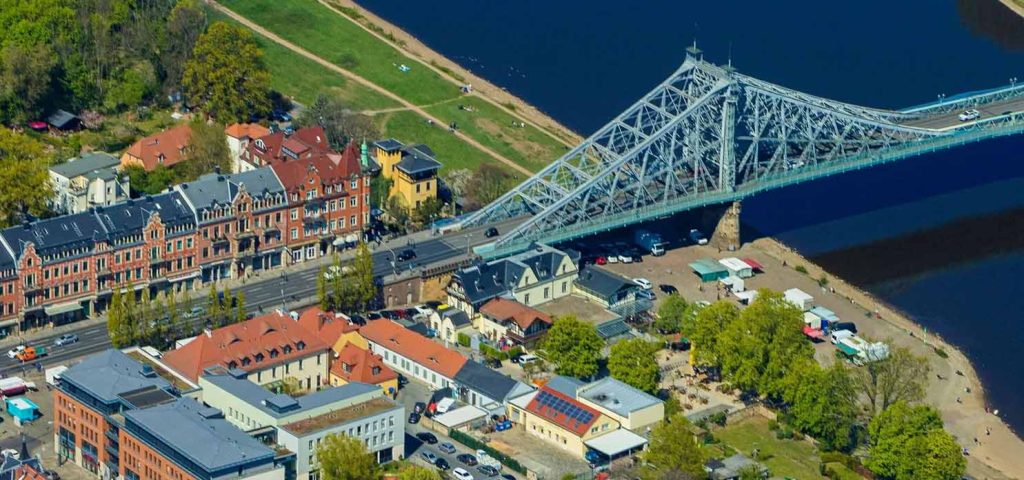
The Blaues Wunder bridge is an important connection across the Elbe with a unique structure and dazzling night lights. I chose to visit at night and use long exposure to capture the bridge lights reflecting on the water, creating a dreamy image. The river below ripples gently with the breeze, the reflection flickering like a starry river.
The nearby riverside path is a gathering place for walkers and photography lovers. Occasionally, street musicians play, blending night and music into a unique city rhythm. I use a large aperture lens to capture details of the bridge and light effects and also photograph silhouettes of people pausing on the bridge, making warm, story-filled scenes.
9. Elbwiesen Park’s Natural Light and Shadow — An Oasis Away from City Bustle
Elbwiesen Park, located by the riverbank, is a popular leisure spot for locals. The natural light and shadows here are rich and variable, especially in spring and summer when sunlight filters through leaves, casting mottled spots on the grass. I prefer using a macro lens to capture the interplay of flowers and light in detail.
The park’s winding trails are perfect for hiking and jogging and also great for shooting the blend of human and nature. At dusk, the setting sun dyes the sky and river red, with distant city outlines faintly visible. The entire scene is tranquil and poetic, an ideal urban oasis image in my heart.
10. Photography Tips and Equipment Sharing
On this Dresden photography trip, I brought a full-frame camera, a 24-70mm standard zoom lens, a 70-200mm telephoto lens, and a 50mm prime lens. Switching lenses flexibly according to different scenes greatly improved shooting efficiency and image variety. A tripod was essential, especially for low-light and long-exposure shots.
I recommend photography enthusiasts plan shooting times in advance, paying special attention to the “golden hours” of early morning and dusk when the light is soft and rich in changes, the best times to showcase the city’s charm. Also, try different angles and compositions and avoid sticking to conventional perspectives — Dresden’s beauty goes far beyond the surface.
Dresden is a city that writes a symphony of history and modernity with light and shadow. The Elbe River, like a band of light, links the city’s cultural essence and natural scenery. Whether at dawn on Brühl’s Terrace or nightfall by the Semperoper, every angle holds unique stories and emotions. Through my lens, I witnessed Dresden’s multiple faces from classical to modern and felt the soul of the city woven by light and shadow.
If you love photography and yearn to tell the story of a city through images, the banks of the Elbe in Dresden are definitely worth your deep exploration with a camera. Bring your gear, step into this canvas woven by light and shadow, and capture your own exclusive Dresden memories.