Dresden, often referred to as the “Florence on the Elbe,” had long been a city etched in my travel wish list. It had always occupied a special place in my imagination—a city of spires, domes, and majestic facades where art and history are not confined to galleries but spill into daily life. The name itself evoked images of Baroque splendor and riverside tranquility, where music and architecture harmonize with the landscape.
It carries the deep historical legacy of Germany, yet stands as a living testimony to rebirth, having rebuilt its former glory brick by brick after the devastation of war. The resilience of Dresden is not just seen in the restored monuments but felt in the city’s rhythm, where remembrance and renewal coexist in quiet elegance. Walking through its avenues, I could sense the layers of history—moments of grandeur, tragedy, and triumph—woven into the very stones beneath my feet.
Culture in Dresden isn’t a superficial façade, but a deeply rooted essence that pulses through its streets. It’s in the hushed awe inside museums, the spontaneous violinist playing beneath an archway, the detailed carvings on every building, and the way locals speak about their city with affection and pride. This is a place where culture is lived, not just displayed—a continuous conversation between past and present.
My journey here began at the Zwinger Palace and followed the cultural axis along the Elbe River, filled with art and architectural wonders—a route that brought me closer to the soul of this remarkable city. With every step along this path—from palace courtyards to opera balconies—I felt as though I was unraveling a symphonic narrative, each site a note in Dresden’s grand composition. It was a journey of the senses and spirit, one that deepened my appreciation for the enduring power of beauty and memory.
1. First Encounter with the Zwinger Palace: A Royal Dream Carved by Time
Early in the morning, I stepped through the archways of the Zwinger Palace, feeling as though I had crossed into another century. The sky was still dim, raindrops tapping gently on the bronze gates, and the palace’s baroque sculptures glowed softly under the dawn light. Once the pride of the Saxon monarchy, this architectural masterpiece now welcomes visitors from around the world with a stately grace.
The Zwinger is not merely a spot for photographs; it is an open-air chronicle of history. Passing through the Crown Gate (Kronentor), I imagined the sound of horse-drawn carriages on cobblestone paths. The symmetrical arcades of the circular courtyard naturally guided my gaze toward the heart of the palace: its renowned art galleries.
My first stop was the Old Masters Gallery (Gemäldegalerie Alte Meister). The lighting inside was masterfully arranged, casting a soft glow on priceless paintings. I stood silently before Raphael’s “Sistine Madonna,” captivated by the innocence and introspection in the angels’ eyes. Deeper inside, works by Titian, Rembrandt, and Vermeer offered more than artistic beauty—they were emotional relics preserved by time.
After touring the gallery, I sat in the courtyard with a cup of hot chocolate. The rain had stopped, and golden sunlight bathed the palace dome. Surrounded by the grand silhouettes of baroque architecture, I suddenly understood what it meant to be in a true “cultural court.”
2. Glistening Royal Splendor at the Green Vault
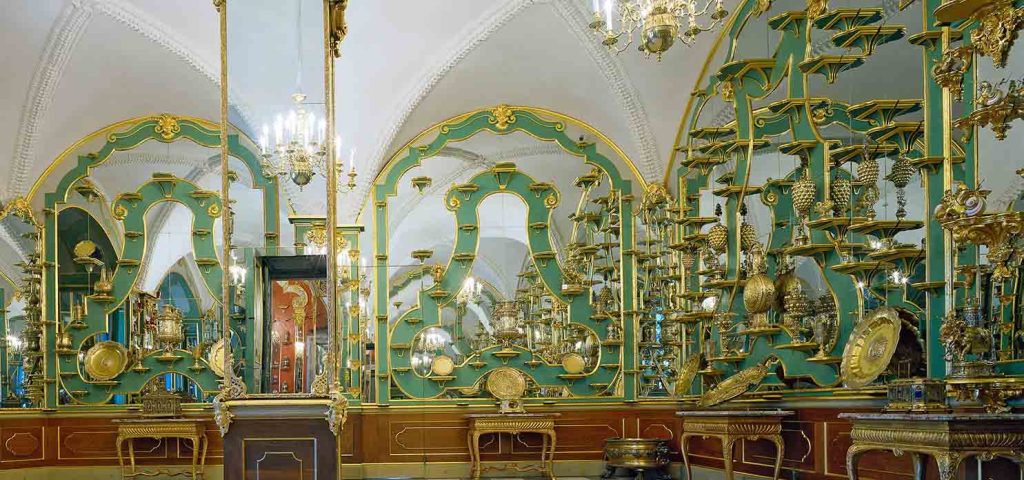
Leaving the Zwinger, I followed a narrow path along the palace walls to the Green Vault (Grünes Gewölbe), one of Europe’s most prestigious royal treasure collections, often called “Germany’s Jewel Box.”
The moment I stepped inside, I was awestruck by the opulence. This wasn’t a sterile museum, but a realm of living luxury: ivory-carved banquet scenes, turquoise-inlaid scepters, jewel-encrusted daggers and crowns. Each piece pulsed with life and grandeur, whispering tales of courtly ceremonies, diplomatic gifts, and royal vanity.
I was particularly mesmerized by the “Courtly Festival of the Moors,” a meticulously crafted scene from the 18th century. Over 40 Moorish figures in exotic attire made from gold and silver, each with vivid expressions and unique gestures. Their miniature instruments, goblets, and silk robes formed a celebration frozen in time. This miniature spectacle, embedded with hundreds of precious stones, revealed both the Saxon court’s imagination and its thirst for beauty and power, as well as its fascination with the exotic and theatrical.
As I exited the Green Vault, I glanced back at the heavy arched doors. In my mind, a profound realization echoed: culture isn’t about displaying relics, but about building a spiritual pyramid through generations of power, wealth, faith, and passion—each artifact not just a treasure, but a chapter in a grand narrative of European civilization.
3. Chimes and Light in the Opera District
From the palace district, I leisurely strolled across Theaterplatz, heading to the day’s highlight: the Semperoper. Like a dignified old gentleman who had weathered many storms, the Semperoper stood elegantly by the Elbe. Designed by Gottfried Semper in the 19th century, it was destroyed in the war and later rebuilt, becoming a symbol of both artistry and rebirth—a phoenix in sandstone.
I joined a guided tour in Chinese. The moment I entered, the ceiling frescoes and golden details took my breath away. The red velvet seats were plush and inviting, the chandeliers glimmered like stars suspended in midair. We were led backstage, through mechanical lifts and costume rooms, revealing the massive machinery behind every operatic performance—the heart of the house, where art meets discipline.
That evening, I returned to the Semperoper for Mozart’s The Marriage of Figaro. Wearing a modest hat and tailored coat, I stepped inside, letting the orchestra’s overture carry me into a world of aristocratic irony and charm. From witty arias to comic duets, the performance flowed like champagne. When the curtain fell, snowflakes were dancing outside. The cobblestones sparkled under the lights, and the river shimmered in the distance. It felt like I had just stepped out of an eternal dream woven by Dresden itself—one I knew would echo in memory long after the music faded.
4. Twilight and Nightfall by the Elbe
After leaving the opera, I didn’t rush back to my hotel. Instead, I wandered along the Elbe River promenade, allowing the emotional resonance of Mozart’s music to slowly settle. The breeze was crisp, tinged with the scent of snow, and delicate snowflakes spiraled through the air like confetti from a celestial celebration.
Across the river, lights flickered in Dresden’s New Town, their golden reflections rippling across the water. Distant bridges, including the historic Augustus Bridge, glowed warmly against the darkened sky, their arches like luminous gateways to other worlds.
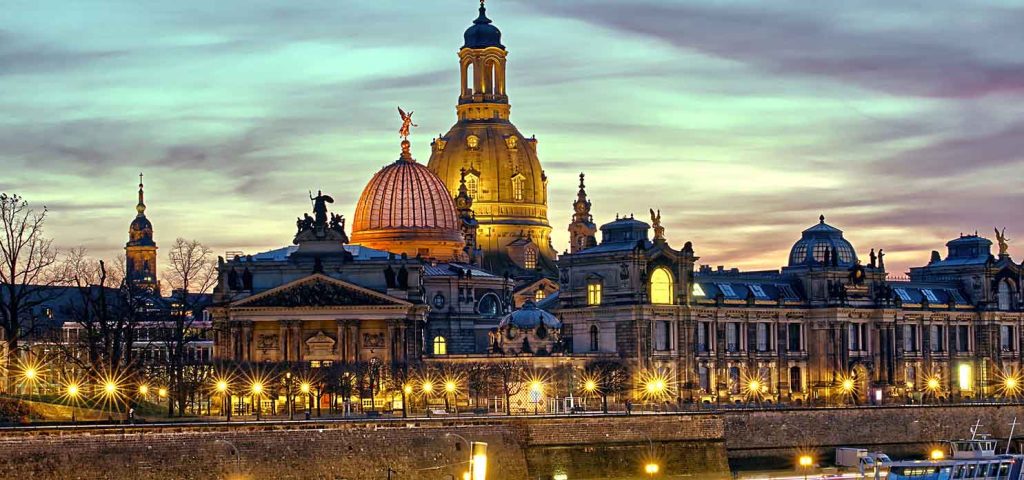
I reached Brühl’s Terrace, known as the “Balcony of Europe,” offering sweeping panoramic views of the Elbe and the city’s historic skyline. Classical domes, soaring spires, and modern lights coexisted in quiet harmony, creating a poetic tableau of time suspended. A street violinist stood beneath a lamppost, playing a gentle adagio that curled into the night air. The melody lingered, delicate and stirring, adding a tender footnote to my day of cultural immersion. I stood there, wrapped in the hush of evening, feeling as if Dresden itself had paused to take a deep, elegant breath.
5. Beyond the Icons: A Glimpse into Dresden’s Daily Life
The next morning, I skipped the major sights and instead explored Dresden’s daily rhythm. In the New Town, on Alaunstraße, I sipped a ginger-infused latte in a café filled with soft jazz and mismatched vintage chairs. Outside, bicycles lined the sidewalks, and the crisp morning air carried the aroma of freshly baked bread. I browsed through photography books by local designers, many capturing the city’s transformation since reunification—abandoned factories turned into art studios, or quiet streets awakening with new voices.
I also visited a few independent galleries tucked behind ivy-covered façades. Unlike the grandeur of the Old Town, these streets were relaxed, colorful, and filled with youthful creativity. Murals bloomed across alley walls, and storefronts displayed handmade ceramics, abstract prints, and artisanal chocolates.
I met a photographer capturing the city’s silhouette at dusk, silhouetted against a pink-tinted sky. He told me, “Dresden doesn’t just belong to the past. Its culture is fluid, young, and open.” That comment helped me see Dresden’s essence anew—it gracefully balances the weight of history with the lightness of modern life, offering a space where tradition and imagination coexist in harmony.
6. Departure and Reflection
On the day I left, I stood on the train platform and looked back toward the old city walls. This wasn’t just a cultural checklist, but a spiritual retreat. I had paused before paintings in the Zwinger, immersed myself in royal opulence at the Green Vault, drifted through melodies at the opera, and strolled quietly in the river breeze—each experience a note in my personal Dresden symphony.
Culture, I realized, isn’t just a decorative symbol. It settles into your heart when you walk, see, and listen attentively. As my train slowly pulled away from Dresden, I knew I would carry the city’s sounds and images into the next chapter of my journey.
If you too are seeking a journey where beauty and culture intertwine deeply, consider placing Dresden on your map—from the Zwinger to the Semperoper, you might just discover that the most moving part of a city lies not in its grandeur, but in the quiet way it tells its story.