In January, Leipzig’s air is crisp, the sunlight pale and rare, as if all sound is absorbed by the cobblestone streets of this ancient city, leaving behind only the echo of history murmuring in your ears. I pushed open the window of my hotel and was greeted by a delicate layer of snow atop the rooftops of the old town, light as feathers resting on tiles, casting a dreamlike filter over the entire city. In the distance, the church tower loomed faintly, as if just awakening from the fog. The corner café hadn’t opened yet, its display windows still holding traces of last night’s warm glow, and the street lamps preserved the final glimmers of dusk. Wrapping myself in a coat, with a touch of chill and a hint of anticipation, I stepped into a tranquil yet weighty winter morning in Leipzig’s old town.
I. Morning Light in the Old Market Square
The heart of the old town begins at the Marktplatz, or Old Market Square. At 6:30 a.m., I walked along the slightly slippery cobblestone street, each step feeling like I was treading on a piece of history. The air was laced with frost, and the faint creak of my boots echoed through the empty square. Once the bustling center of medieval trade, today it stands as a city parlor sculpted meticulously by time.
On the eastern side of the square stands the Old Town Hall (Altes Rathaus), its Baroque-style yellow façade glowing softly in the dawn. A small tower with a golden dome crowns the building, gleaming faintly in the morning light. I noticed the ornate window frames, some with tiny icicles hanging from their corners. The worn reliefs on its walls seem to narrate the legends of centuries past, including royal proclamations and guild parades that once filled this square with life. I stood on the steps in front of the Town Hall, closed my eyes, and tried to listen—wondering if the market’s chatter and haggling still whispered in the wind. Even in silence, the square seemed to hum with memory.
II. The Bells of St. Thomas Church
Crossing Kleine Fleischergasse from the Old Market, I arrived at St. Thomas Church (Thomaskirche) just in time for the 8 a.m. chimes. The deep, solemn bell tones rang clearly through the cold morning air, as if time had stirred awake in that moment. Their reverberation against the surrounding buildings created a kind of sacred stillness, one that made even passing footsteps feel reverent.
The church’s outer walls, weathered by centuries, bore silent traces of erosion—layer upon layer of Leipzig’s story etched into stone. Johann Sebastian Bach once served here as the choirmaster for 27 years, and his grave rests quietly beneath a marble slab at the front of the sanctuary, surrounded by a simple brass railing.
Stepping inside, I was greeted by the sharp scent of incense and the soft gleam of stained-glass windows filtering pale winter light. The wooden pews creaked faintly, as if whispering their own stories to those who listened. I sat for a moment, absorbing the quiet. An elderly man sat at the organ, tuning a hymn. The opening notes slowly filled the air—gentle at first, then rising, like breath returning to stone. In that instant, I felt immersed in Bach’s timeless melodies, his spirit seemingly alive in every echo. This church is not only a sanctuary of faith—it’s a cornerstone of world musical heritage, a place where sound and soul converge.
III. The Quiet of Books: The German National Library and the Publishing Quarter
After leaving St. Thomas Church, I walked east along Nikolaistraße to reach another cultural gem of Leipzig: the German National Library (Deutsche Nationalbibliothek Leipzig). Outside, snow-laced tree branches swayed gently in the breeze, framing the cream-colored façade like a still-life classical painting. A light dusting of snow muffled the sound of passing cars, creating a serene, almost sacred approach to the building. Even the footsteps of other visitors seemed more measured, more respectful, as if in quiet awe of what the building held.
The library holds every German-language book published since 1913—a sanctuary of knowledge for the German-speaking world. As I stepped into the grand hall, soft lights reflected off the marble floor, and rows of neatly arranged bookshelves stood quietly, dignified. The atmosphere was reverent, hushed, yet far from cold—it felt alive with thought. Gloved staff members handled rare manuscripts with great care, their movements slow and precise, like guardians of ancient treasure. I found myself lingering near the reading rooms, drawn by the silent energy of people absorbed in old texts and new discoveries.
Across from the library lies Graphisches Viertel, a narrow and modest alley once home to Germany’s leading publishers. Though quieter now, its walls still seem to hum with the ghosts of presses and printing blocks. Some 19th-century publishing houses still stand, their windows pasted with yellowed typography samples, and metal printing molds still gather dust in the corners. A faint smell of old ink and wood still lingers in the air. At the end of the alley, I paused—it felt like I had stepped back into a world where the clinks of typesetters filled the air, and the scent of paper was the perfume of progress.
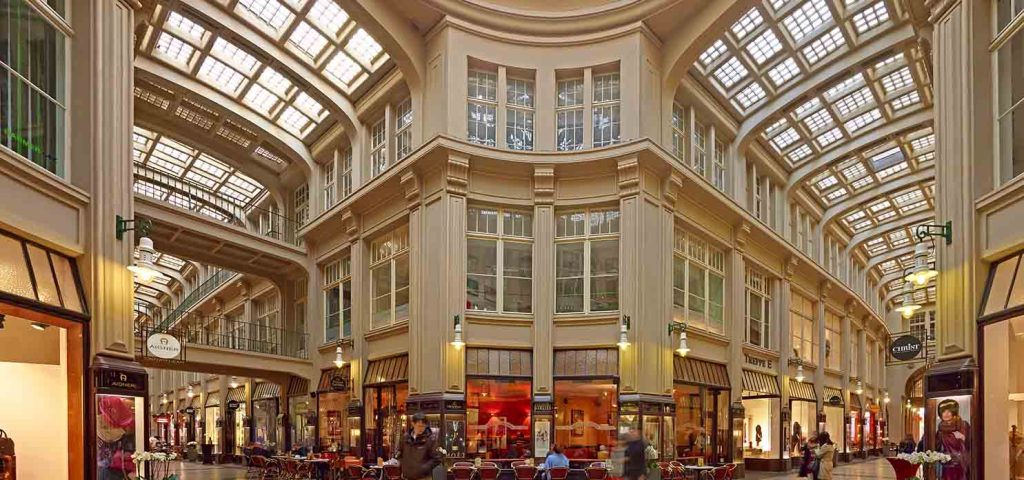
IV. Midday Pulse: Mädler Passage
Leipzig’s rhythm is usually measured and unhurried, but by noon, certain corners of the old town begin to stir with life. Walking down Grimmaische Straße, past street musicians and window shoppers bundled in scarves, I entered the renowned Mädler Passage. Built in 1912, this vaulted arcade is now home to luxury boutiques, stationery shops, and antique dealers, but its deeper charm lies in its ceremonious, old-world German grandeur. It’s not just a place to shop—it’s a corridor of elegance and preserved history.
Under its glass ceiling, light pooled across polished marble floors. The air carried a subtle mix of perfume, roasted nuts from a nearby stall, and the faint scent of aged wood. Every footstep echoed softly, adding to the theatrical atmosphere of the place. I paused at the entrance of Auerbachs Keller, one of Leipzig’s oldest taverns and famously referenced in Goethe’s Faust—the very place where Mephistopheles first appears to Faust. A bronze statue near the stairwell depicted the scene, and tourists snapped photos before descending into its historic depths.
V. Witness of Loss and Rebirth: St. Nicholas Church
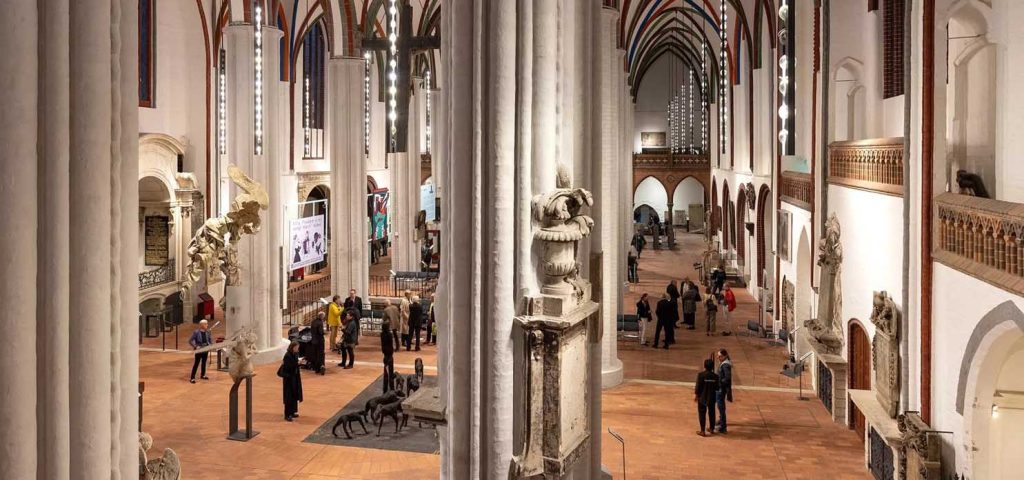
In the afternoon sun, the pale pink columns of St. Nicholas Church (Nikolaikirche) glowed softly. I walked in slowly, gently pulling the heavy wooden door shut behind me. Founded in the 12th century, this church exuded an atmosphere distinct from that of St. Thomas.
It’s not just a place of worship—it’s a symbol of political transformation. In 1989, it became the starting point of peaceful demonstrations that ultimately led to the fall of the Berlin Wall. Beside the altar, I saw a painting of protestors holding candles. In that moment, I understood: stillness does not mean silence. It can also be a powerful voice.
VI. Nightfall: Vintage Cinemas and Jazz Bars
As night fell, the “movement” of the old town transitioned into another rhythm. After a short rest at the hotel, I walked along Petersstraße to UT Connewitz—a historic cinema founded in 1912. Black-and-white films, reel projectors, plush red seats—it felt like stepping into the artistic heartbeat of the 20th century.
After watching a silent German film, I headed toward the Spinnerei district and found Telegraph Bar, a jazz bar tucked away near the edge of the former industrial zone. Inside, the wooden bar gleamed, and the bartender deftly mixed a Leipzig Night—gin-based, slightly bitter and sweet, much like the city’s character. A saxophonist on stage played slow, gentle notes. The rhythm was unhurried, perfectly easing the weariness of my long walk through history.
VII. A Midnight Walk: Stars Above the Old Town Hall
At midnight, I returned to the Old Market Square. A cold wind blew through empty streets, with only a few late-night wanderers still about. The tower of the Old Town Hall stood like a steadfast watchman in the dark. I climbed the spiral staircase to the top—an ascent traded with time and effort.
From the tower, I looked down upon the old town. The spire of St. Thomas Church rose through the haze. The glass roof of Mädler Passage shimmered under streetlights. In the distance, the dome of St. Nicholas Church glowed like the moon. Standing at the heart of this city wrapped in centuries of memory, I finally understood the true essence of Leipzig’s old town—its stillness and its movement.
Its stillness lies in its cobbled streets, old churches, and ancient libraries that murmur softly of the past; its movement is in the ringing bells, jazz music, and candlelit marches that pulse with an undying heartbeat.
January in Leipzig preserves its deepest warmth beneath layers of snow and reveals its irreplaceable soul at every street corner. Though this journey through time may have reached its end, the images and melodies stirred within my heart shall never fade.